



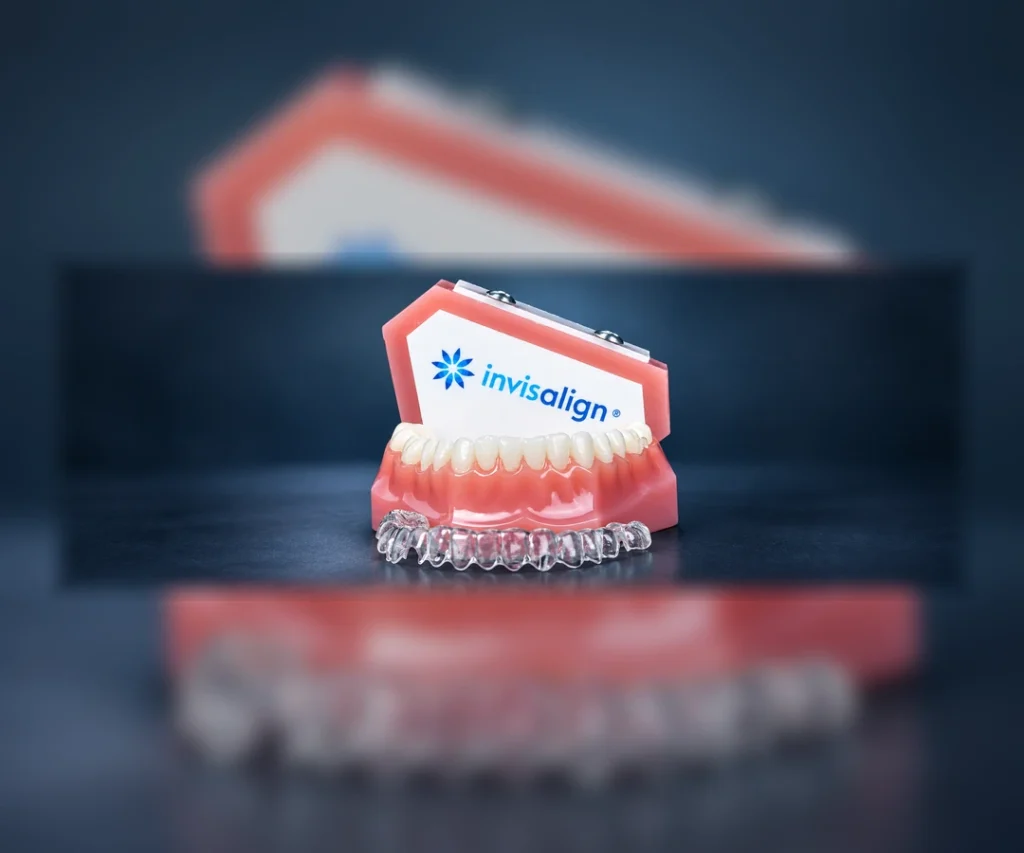
Clear Aligner Treatment
(Invisalign)
Contents
What Are Clear Aligners?
Custom removable aligners gradually move teeth. They fit over the teeth and are less noticeable than conventional braces. Digital planning defines intended positions and the aligner sequence. Invisalign is one of the systems available.
How Does Treatment Work?
Examination and digital impressions establish current positions and planned movement stages. Custom aligners are worn in sequence, with reviews to monitor movement and make adjustments if needed.
What Are the Advantages?
Less Visible
Clear aligners are less noticeable in daily life than conventional metal brackets.
Removable
They can be removed for meals, brushing and when appropriate, offering practical flexibility.
Easier Oral Hygiene
Removable trays allow easier tooth and interdental cleaning than fixed brackets.
Digital Planning
Movements are planned digitally before treatment and progress can be reviewed in stages.
Who May Be Suitable?
Suitability depends on tooth position, crowding and the bite. Orthodontic assessment and digital planning establish individual options.
Crowded Teeth
Many mild to moderate crowding cases may be treated with suitable planning.
Gaps Between Teeth
Aligners may close suitable gaps between teeth.
Bite Problems
Some crossbite, deep-bite and open-bite cases may be suitable.
What Are the Treatment Stages?
Examination and digital records establish current positions and goals. Custom trays are changed at planned intervals, with regular reviews and adjustments where needed.
Examination and Digital Impressions
We examine the mouth and take digital impressions to assess the teeth in detail.
Personalised Planning
Movement stages and the treatment sequence are planned individually.
Wearing Your Aligners
Trays are worn in order, each aiming to move teeth gradually in the planned direction.
Review and Follow-Up
Reviews assess progress and any necessary changes to the plan.
What Should I Do While Wearing Aligners?
Consistent wear as prescribed is important. Remove trays for meals and hot drinks, clean teeth before reinserting them and clean trays daily. Store them in their protective case when not in use.
Consistent Wear
Follow your dentist’s daily wearing schedule to support planned movement.
Cleaning and Hygiene
Clean trays regularly and make sure teeth are clean before reinserting them.
Protective Storage
Use the protective case to prevent loss or damage when trays are removed.
Frequently Asked Questions About Clear Aligners
Numbers vary with starting positions, the amount of movement and complexity. Smaller cases may need fewer trays; broader treatment may need more. Digital planning establishes the sequence.
Aligners are generally worn for most of the day. Many plans recommend approximately 20–22 hours, with removal for meals, drinks and hygiene. Your individual plan sets the schedule.
Yes, trays are removed for meals, so restrictions differ from fixed braces. Clean your teeth and reinsert the trays afterwards.
Hot and coloured drinks are not recommended with trays in place. Tea and coffee can stain them; heat can affect the material. Remove trays for drinks other than water.
Timing varies with starting positions, movements and complexity. Mild cases may take a few months, while extensive care takes longer. Digital planning provides an estimate.
A brief adjustment period is possible, with minor changes to some sounds initially. This usually reduces as the mouth and tongue adapt.
New trays may cause mild pressure or tenderness for a few days as teeth move. Discomfort is usually short-lived and varies between people.
No. Tooth position, the bite, movement types and complexity determine suitability. Orthodontic assessment and planning establish the most appropriate method.
Complexity, aligner numbers, duration and the system affect fees. Limited changes may need a shorter plan; extensive movement may take longer. Assessment and digital planning establish the final plan and costs.
Plan Your Initial Aligner Assessment
Contact our clinic to assess whether aligners may suit you. Examination and digital planning allow us to explain appropriate options and the treatment process.