


Porcelain Veneers
(Laminate Veneers)

A Natural-Looking Smile
What Are Porcelain Veneers?
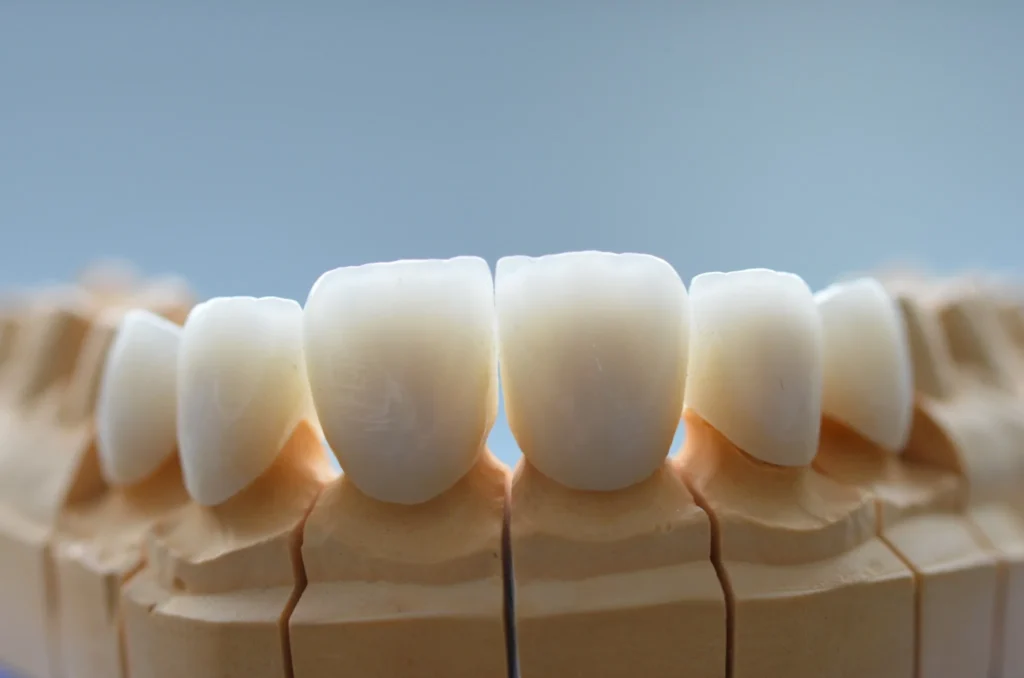
Porcelain veneers are thin, custom ceramic restorations bonded to the front surfaces of teeth. They may address colour, shape and limited gaps, particularly in front teeth.
Not every aesthetic concern requires veneers. The choice considers healthy tooth tissue, the bite and your expectations. At CADDENOVA in Kadıköy, we prioritise preserving natural tooth tissue.
Veneers, Bonding and Crown Differences · Frequently Asked Questions
Not every aesthetic concern requires veneers. The choice considers healthy tooth tissue, the bite and your expectations. At CADDENOVA in Kadıköy, we prioritise preserving natural tooth tissue.
Veneers, Bonding and Crown Differences · Frequently Asked Questions
01
Examination and Planning
We assess tooth and gum health, smile appearance and the bite, and discuss expectations and alternatives.
02
Preparation and Impressions
Necessary surface preparation and impressions are completed. The amount of reduction varies between teeth.
03
Production and Try-In
Custom veneers are checked for shade, shape and fit. Any changes are considered before bonding.
04
Bonding and Review
Veneers are fixed with an appropriate bonding system. The bite is checked and aftercare explained.

Compare Your Treatment Options
Porcelain Veneers, Bonding or Zirconia?
Porcelain veneer: A thin ceramic restoration covering mainly the front surface, used to adjust colour and shape.
Bonding: Tooth-coloured composite may address small chips and suitable gaps. Repair can be easier than with porcelain.
Zirconia crown: A full-coverage restoration surrounding the tooth. Its use for substantial tissue loss differs from a front-surface veneer.
The choice depends on remaining tissue, the bite and expectations, not the material name alone. Aesthetic dentistry options can be assessed together.
Bonding: Tooth-coloured composite may address small chips and suitable gaps. Repair can be easier than with porcelain.
Zirconia crown: A full-coverage restoration surrounding the tooth. Its use for substantial tissue loss differs from a front-surface veneer.
The choice depends on remaining tissue, the bite and expectations, not the material name alone. Aesthetic dentistry options can be assessed together.
Why Can Porcelain Veneers Look So Natural?
An important reason is ceramic’s ability to transmit and reflect light in a way similar to natural enamel. Natural teeth are not uniformly opaque: light passes into enamel and reflects through layers, giving depth. Selecting translucency, opacity and thickness appropriately can reproduce these optical qualities.
Thin veneers may preserve much of the tooth in suitable cases and benefit from the underlying tooth’s optical properties. Colour, translucency, texture and gloss are coordinated with neighbouring teeth to create a natural-looking result , especially in the front teeth.
Before You Decide
Frequently Asked Questions About Veneers
Who may benefit from veneers?
They may suit limited front-tooth chips, shape or size differences, some discolouration and small gaps. Active decay and gum problems are treated first. Significant crowding or bite problems may need other treatment.
Do teeth need to be reduced?
Controlled enamel preparation is needed in many cases. The amount depends on position, colour and the intended shape. No-preparation veneers are not suitable for everyone. Enamel removal is irreversible and should be discussed before deciding.
How many visits are needed?
Stages include assessment, preparation, impressions, try-in and bonding. Visits depend on tooth numbers, preliminary treatment and laboratory work. An examination is needed before confirming timing.
Can sensitivity occur afterwards?
Temporary temperature sensitivity can occur. Arrange a review for increasing or persistent pain, bite discomfort or edge problems. Thin veneers are not risk-free.
How long do veneers last, and can they come off?
Veneers can last for years but cannot be guaranteed for life. Fracture, cracking or loss of bonding may require repair or replacement. Grinding, the bite, care and reviews affect outcomes. Do not glue a detached veneer yourself; contact your dentist.
How should I care for veneers?
Brush twice daily with fluoride toothpaste and clean between teeth daily. Avoid nail biting, chewing pens and opening packaging with teeth. Veneers do not prevent decay in the underlying tooth. Discuss protection if you grind your teeth.
Can veneers stain or be whitened?
Porcelain resists staining, but surface or edge stains can occur. Whitening does not lighten veneers like natural teeth. Coordinate veneer shade and any natural-tooth whitening before treatment.
What affects the cost?
Costs depend on the number of teeth, ceramic, laboratory work and preliminary care. Discuss the scope of alternatives during assessment.
For personalised planning at CADDENOVA in Kadıköy, see our contact and appointment details.
Information sources: ADA: Veneers and Care · Cleveland Clinic: Dental Veneers · Leeds NHS: Crowns and Alternatives · ADA: Whitening
For personalised planning at CADDENOVA in Kadıköy, see our contact and appointment details.
Information sources: ADA: Veneers and Care · Cleveland Clinic: Dental Veneers · Leeds NHS: Crowns and Alternatives · ADA: Whitening