

Do you need an electric toothbrush to clean your teeth properly, or can a manual brush do the job?
Both can clean effectively when used correctly. Technique, reaching every tooth surface and keeping a consistent routine also matter. Two electric toothbrush features are particularly useful in everyday brushing: a pressure warning and a timer.
Does an electric toothbrush always clean better?
Research shows that electric toothbrushes can, on average, reduce plaque and gum inflammation more than manual brushes. The clinical importance of those differences is less clear. This does not mean a manual toothbrush cannot clean well, or that buying an electric model guarantees a better result. Evidence-based guidance
If you already clean effectively with a manual brush, you do not need to feel obliged to switch. The useful question is which features could help you improve your own brushing habits.
1. Pressure alerts: Pressing harder does not mean cleaning better
A common mistake is to assume that extra force gives a better clean. Brushing should use gentle pressure.
Some electric toothbrushes alert you when you press too hard, using a light, vibration or another signal. The feedback can make an unnoticed habit easier to recognise and help you reduce the pressure. Features vary between models, and not every electric brush has a pressure sensor. Australian Dental Association guidance
The practical benefit is immediate feedback while you brush. Rather than focusing on force, you can learn to guide the head carefully across the tooth surfaces. A pressure warning does not, by itself, guarantee correct technique.
2. A timer: Know how long you actually brush
It is easy to overestimate brushing time when you are busy. A timer helps you track the session instead of guessing. Some models also give regular signals to remind you to move to another part of your mouth.
These reminders can help you avoid stopping too soon or spending most of the session on the same area. Finishing the timer does not prove that every tooth surface has been cleaned, so coverage still matters.
The general recommendation is to brush twice a day for about two minutes with fluoride toothpaste. Soft bristles and gentle pressure also support a careful routine. American Dental Association
Can a manual brush support the same habits?
Yes. You can use a separate timer, follow a consistent order around your mouth and consciously keep the pressure light. An electric brush offers the convenience of having these reminders built into the device when the relevant features are included.
Whichever brush you choose, cleaning between your teeth remains part of daily oral care. Ask your dentist which method and tools suit your mouth. NHS oral care guidance
How do you use an electric toothbrush?
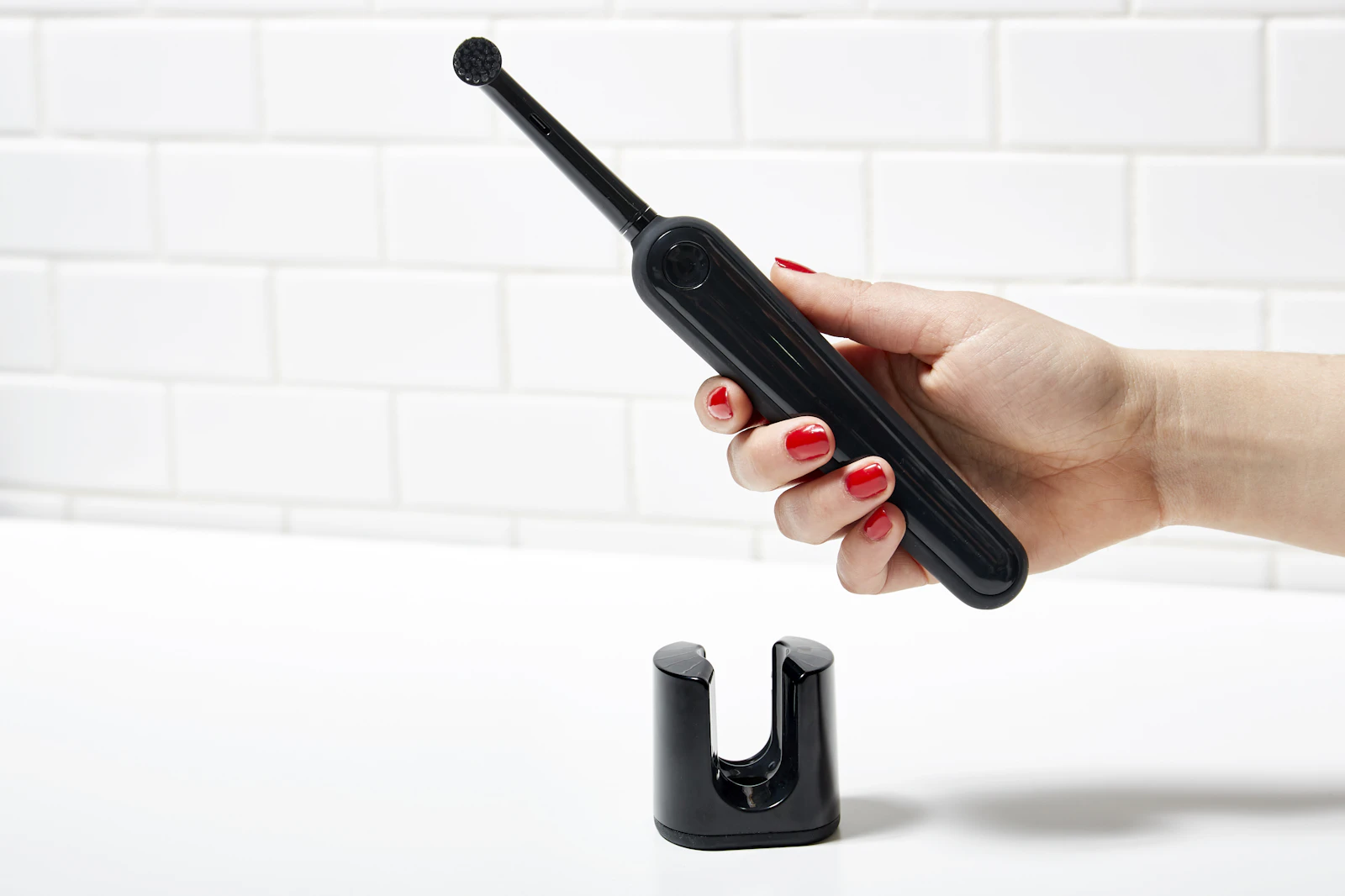
Guide the head across the outer, inner and chewing surfaces, using gentle pressure. With a small round head, pause briefly on each tooth and let the brush work rather than scrubbing vigorously. Follow your model’s instructions because head movements differ. NHS brushing guidance
Can an electric toothbrush damage teeth or cause gum recession?
Whether you use a manual or electric brush, choose soft bristles and avoid excessive pressure. Gum recession should not be attributed to the brush type alone. If you have recession, sensitivity or bleeding, ask your dentist to assess the cause. A pressure sensor is a reminder, not a guarantee against injury. ADA toothbrush guidance
Can you use an electric toothbrush with braces or fillings?
An electric brush can be used with fixed braces. Clean above, around and below the brackets, and continue the recommended cleaning between teeth. NHS advice for fixed braces If you have fillings, ask your dentist about suitable heads and pressure. Pain, looseness or suspected damage needs examination rather than simply a different brush.
How do you choose an electric toothbrush for a child?
Choose an age-appropriate model with a small, soft-bristled head and check the manufacturer’s age guidance. An electric brush does not replace adult help or supervision. Make sure every tooth surface is cleaned. ADA advice for children
Which brush head should you choose, and when should you replace it?
Choose a soft-bristled head compatible with your exact model. Replace it about every three to four months, or sooner if the bristles become worn or splayed. ADA replacement guidance
Can you wash an electric toothbrush?
Rinse the head after use and allow it to air-dry. Follow the model’s instructions for cleaning the handle and for water resistance; do not apply brush-head rinsing instructions to the charging unit. Toothbrush care
Can you use an electric toothbrush every day?
Yes. It can be part of daily oral care. The general advice is to brush twice daily for about two minutes using soft bristles and fluoride toothpaste. Focus on coverage rather than extra force. ADA daily brushing advice
What are the differences between electric toothbrushes?
Compare head movement, pressure alerts, timers, cleaning modes and compatible replacement heads. More features do not automatically make a model more suitable. Consider which functions will actually help you maintain a consistent routine; availability varies by model.
When was the electric toothbrush invented?
1954 is an important milestone in the development of the modern electric toothbrush: the European Patent Office dates the introduction of Broxodent to that year. Early designs, patents and market launches are different milestones, which helps explain differing dates in historical accounts. European Patent Office history note
Which is the best electric toothbrush to buy?
There is no single best model for everyone. Choose one that is comfortable, offers useful reminders and has replacement heads you can obtain and afford regularly. Your brushing habits, needs and ongoing costs matter more than a brand name alone.
What should you check when comparing Oral-B and other brands?
Check the pressure sensor, timer, suitable heads, replacement-head costs and warranty. Do not assume all models within a brand have the same features. If you encounter searches such as “Dyson electric toothbrush”, verify the exact product on the manufacturer’s official website; an autocomplete suggestion does not establish that a product exists or suits your needs.
Electric toothbrush prices: comparing pharmacies, A101 and dm
Compare the exact model code, included heads, ongoing replacement costs and warranty, rather than the price alone. If researching A101, dm or a pharmacy, check current availability and prices directly with the retailer. A promotion or autocomplete suggestion does not confirm that a particular model is currently stocked.
Should the head rotate, and what if it stops moving?
Head movements differ: some oscillate while others vibrate. A lack of visible rotation alone does not establish a fault. If the usual movement stops, follow the model’s charging and head-fitting instructions and contact support if it persists. Oral-B support · Philips Sonicare troubleshooting
Is buying an electric toothbrush worthwhile?
It may be worthwhile if pressure feedback, timing reminders or ease of use help you brush consistently. Include replacement heads in your budget. A manual brush remains a valid option when used effectively; choose the routine you can maintain.
Which should you choose?
Choose a brush that feels comfortable and that you can use consistently. If you are considering an electric model, pay particular attention to pressure alerts and a timer. These features can support better habits, but careful use still determines how well you cover your teeth.
At CADDENOVA, we can discuss your brushing technique alongside your daily oral care and identify practical changes for your needs.